
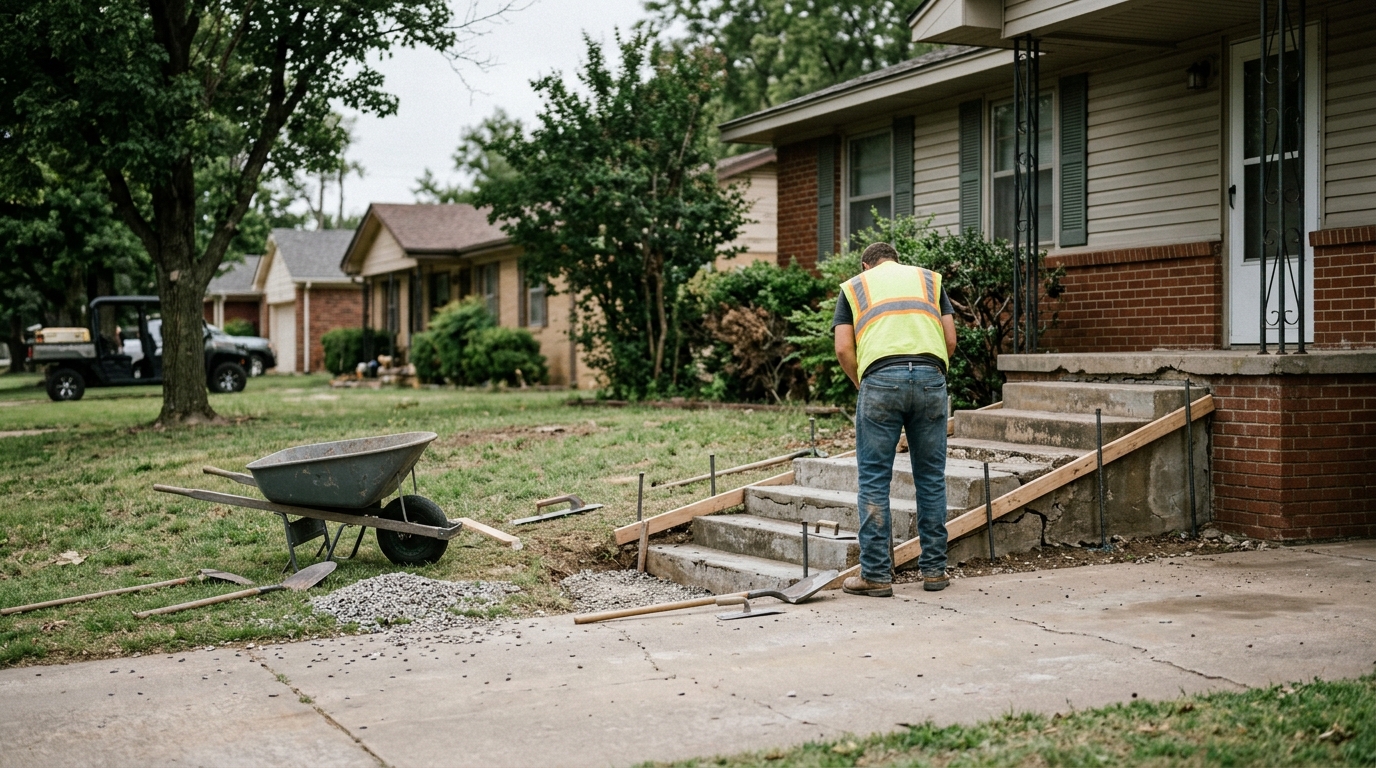
For homeowners in Midwest City, Oklahoma, the decision between repairing and replacing cracked concrete steps depends on the severity of the damage and the structural integrity of the foundation. Replacement is the superior choice for steps with significant structural failure, spalling, or uneven settling. Repair is suitable only for minor surface cracks that do not affect stability. Askews Concrete Connections specializes in both services, helping you determine the right path for your property.
Understanding Concrete Step Repair
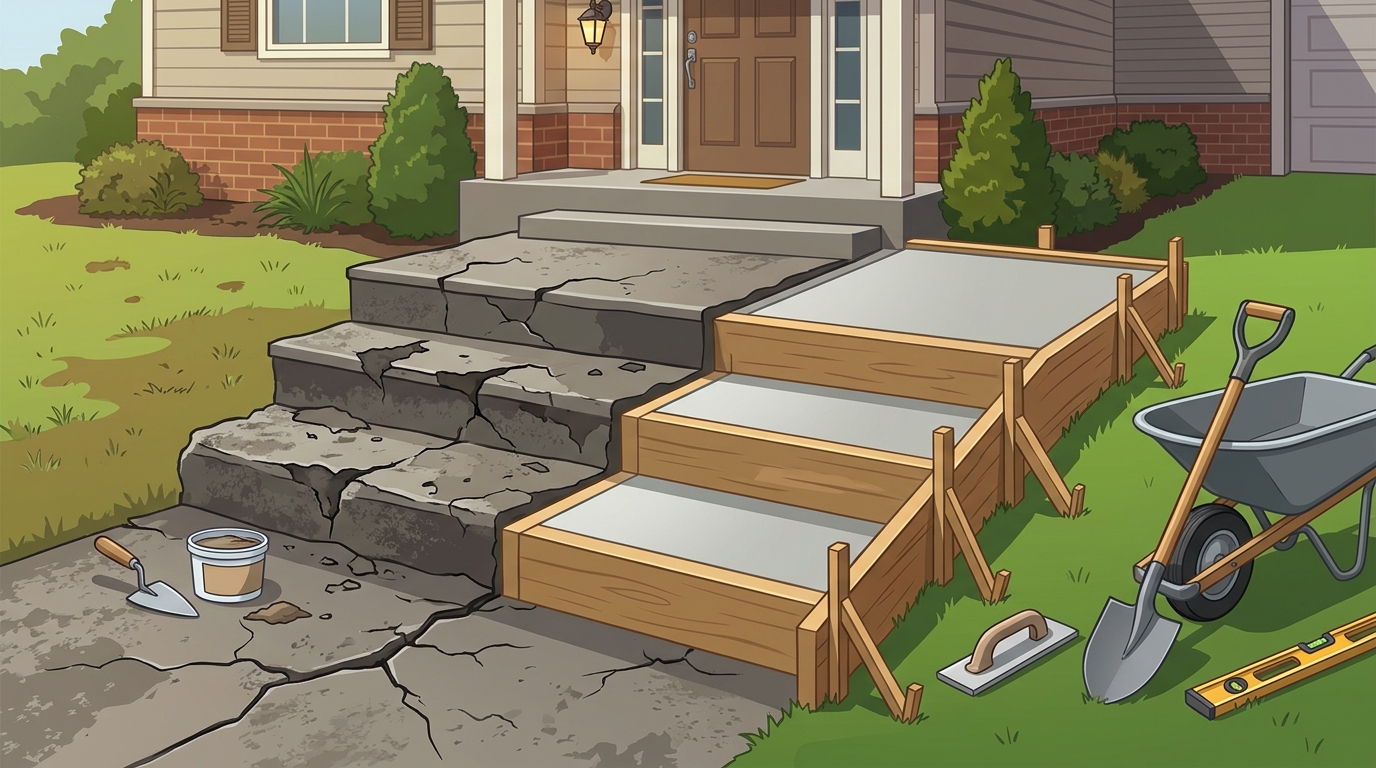
Concrete step repair is a process that involves filling cracks, patching spalls, or resurfacing existing concrete to restore appearance and minor functionality. This method is cost-effective and quick, often completed in a single day. However, repair does not address underlying structural issues. If the concrete has settled or the rebar is corroded, repair will likely fail within a few years. It is best suited for cosmetic damage or hairline cracks that have not yet compromised the step's load-bearing capacity.
When Repair Works
Repair is effective when the crack is less than 1/8 inch wide and the step remains level. It is also appropriate for surface spalling where the concrete chips but the core remains solid. Homeowners should inspect the step for movement. If the step shifts underfoot, repair is not a viable long-term solution.
Understanding Concrete Step Replacement
Concrete step replacement is the complete removal of damaged steps and the pouring of new concrete forms. This process ensures a level, stable, and durable surface. It addresses root causes such as poor drainage, soil erosion, or inadequate original construction. While more expensive and time-consuming than repair, replacement provides a long-term solution that increases property value and safety. It is the recommended approach for steps that are uneven, crumbling, or structurally compromised.
When Replacement is Necessary
Replacement is required when cracks are wider than 1/4 inch, when the step has settled more than 1/2 inch, or when the concrete is spalling extensively. It is also necessary if the steps are not aligned with the door threshold, creating a tripping hazard. In Midwest City, where soil conditions can cause settling, replacement often proves more cost-effective over time than repeated repairs.
Comparison: Repair vs Replacement
The following table compares the two options based on key criteria relevant to Midwest City homeowners.
| Criteria | Repair | Replacement |
|---|---|---|
| Cost | Lower upfront cost | Higher upfront cost |
| Longevity | 2-5 years (if structural issue exists) | 20+ years |
| Structural Integrity | Does not fix settling or rebar corrosion | Restores full structural integrity |
| Time Required | 1 day | 2-3 days (including curing) |
| Best For | Minor cosmetic cracks | Settled, uneven, or crumbling steps |
Choose Repair If...
Choose repair if your steps are level, the cracks are hairline, and there is no evidence of movement or spalling. This is a budget-friendly option for maintaining appearance. It is also a good temporary fix if you plan to sell your home soon and want to improve curb appeal without major investment. However, be aware that repair may need to be repeated if the underlying issue is not addressed.
Choose Replacement If...
Choose replacement if your steps are uneven, have wide cracks, or show signs of crumbling. This is the right choice for long-term safety and durability. It is also recommended if you are planning to stay in your home for many years, as the investment pays off in longevity. Replacement ensures that your steps are properly graded and aligned, reducing the risk of future damage from water or soil movement.
Frequently Asked Questions
Can I repair concrete steps myself?
You can attempt minor repairs with a concrete patching compound, but structural issues require professional assessment. DIY repairs often fail if the underlying cause is not addressed. For safety and durability, it is best to consult a professional for anything beyond surface cracks.
How much does it cost to replace concrete steps in Midwest City?
Will replacing steps affect my home's foundation?
Properly installed steps should not affect the foundation. In fact, replacing damaged steps can prevent water from pooling near the foundation, which can cause further damage. A professional will ensure proper grading and drainage during the replacement process.
How long does concrete take to cure after replacement?
Concrete typically takes 24-48 hours to cure enough for light foot traffic. Full strength is reached in about 28 days. You should avoid heavy loads or vehicles on the steps during this period to ensure proper curing.
Is it better to replace all steps or just the damaged ones?
It is often better to replace all steps for uniformity and alignment. Replacing only one step can create a mismatch in color, texture, and height, which can be a tripping hazard. However, if only one step is damaged and the others are in good condition, a partial replacement may be possible.
Conclusion
Deciding between repair and replacement for your concrete steps requires a careful assessment of the damage. For minor cracks, repair may suffice. For structural issues, replacement is the only viable long-term solution. Askews Concrete Connections offers free estimates to help you make the right choice for your Midwest City home. To schedule your assessment, call us today.