
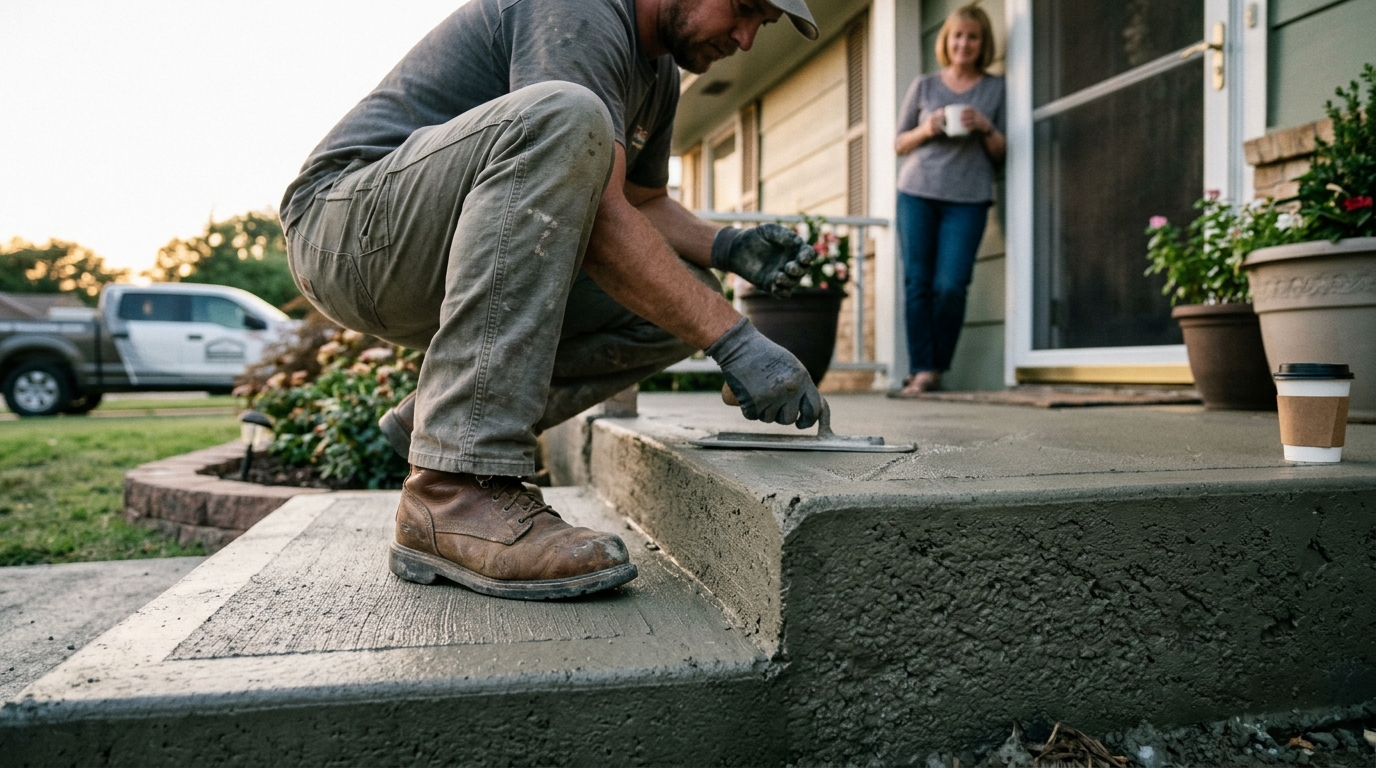
Replacing cracked concrete steps is a structured process that ensures safety and longevity for your home's entryway. Askews Concrete Connections specializes in this precise workflow, serving homeowners in Oklahoma City and McLoud. This guide outlines the critical phases from initial assessment to final curing, helping you understand what to expect during a professional replacement project. For additional details, review the .
1. Assess the Damage and Determine Scope
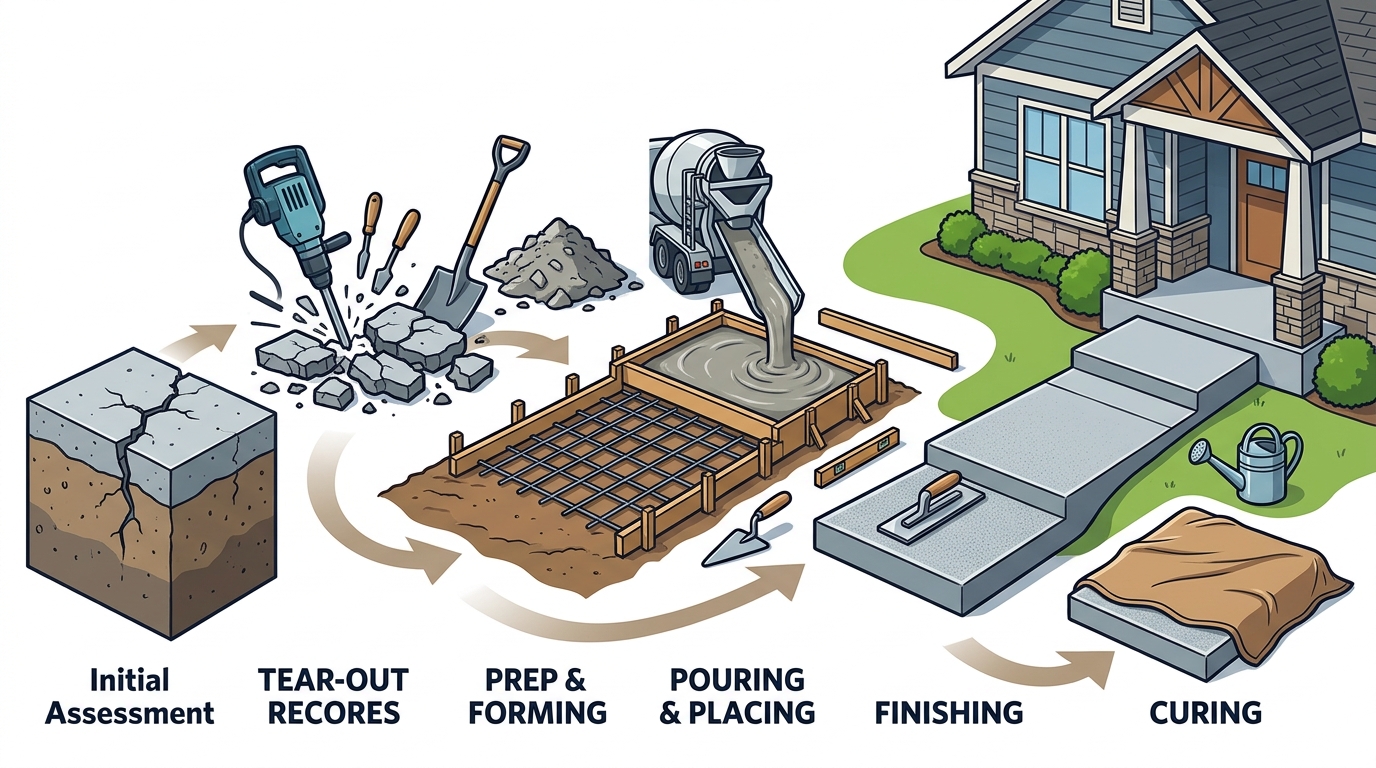
Accurate assessment prevents unnecessary demolition and ensures the right repair strategy. A professional inspection identifies whether the cracks are superficial or structural. If the foundation beneath the steps is compromised, a full tear-out and replacement is required rather than a simple patch. This step also involves checking for drainage issues that may have caused the original failure.
2. Obtain Permits and Plan the Layout
Compliance with local building codes ensures the new steps are safe and legal. Concrete step replacement is a structural modification that often requires a permit in many jurisdictions. The contractor will measure the existing steps to determine the new layout, ensuring proper slope for water runoff and adherence to accessibility standards. Planning the layout in advance prevents costly adjustments during the pour.
3. Demolish and Remove Old Concrete
Complete removal of the old slab is necessary to create a stable base for the new pour. Heavy-duty breakers or jackhammers are used to break the existing concrete into manageable pieces. The debris is then hauled away, and the underlying soil is inspected. This phase is critical because leaving old fragments can lead to future settling and cracking.
4. Prepare the Subgrade and Base
A compacted gravel base provides the stability needed to prevent future shifting. The soil is graded to ensure proper drainage away from the house foundation. A layer of compacted gravel or crushed stone is then installed and leveled. This base layer is essential for distributing the weight of the concrete and preventing frost heave in colder climates.
5. Install Forms and Reinforcement
Proper forms and rebar ensure the steps maintain their shape and structural integrity. Wooden or metal forms are set to define the edges and height of each step. Steel reinforcement, such as rebar or wire mesh, is placed within the forms to resist tensile stress. This reinforcement is the key factor that prevents the new concrete from cracking under load or temperature changes.
6. Pour and Finish the Concrete
High-quality concrete mix and skilled finishing create a durable, slip-resistant surface. The concrete is poured into the forms and vibrated to remove air pockets. A professional finisher then trowels the surface to achieve the desired texture and slope. The finish must be smooth enough for safe walking but textured enough to provide traction when wet.
7. Cure and Protect the New Steps
Proper curing is the final step that maximizes the strength and lifespan of the concrete. The concrete must be kept moist for several days to allow the chemical reaction to complete. Curing compounds or plastic sheeting are often used to prevent rapid moisture loss. Rushing this phase can result in weak concrete that cracks prematurely.
Choosing the Right Approach
When deciding between a patch and a full replacement, consider the extent of the damage. If the cracks are wide, the steps are uneven, or the base is unstable, a full replacement by a professional like Askews Concrete Connections is the only long-term solution. For minor surface cracks, a patch may suffice, but it does not address underlying structural issues.
Frequently Asked Questions
How long does it take to replace concrete steps?
A typical concrete step replacement takes 2 to 3 days for demolition and pouring. However, the concrete requires 28 days to reach full strength, though it can usually be walked on after 24 to 48 hours.
Can I replace concrete steps myself?
While possible, DIY replacement is risky due to the need for heavy equipment and precise grading. Professional contractors have the tools and experience to ensure the steps are level, properly reinforced, and code-compliant.
How much does it cost to replace cracked concrete steps?
Costs vary based on size, complexity, and local labor rates. A professional estimate is the best way to determine the price, as it accounts for demolition, materials, and disposal fees.
Why do concrete steps crack in the first place?
Cracking is usually caused by poor drainage, soil movement, or inadequate reinforcement. Water pooling around the steps can erode the base, causing the concrete to shift and crack over time.
Do I need a permit to replace concrete steps?
Permit requirements vary by local jurisdiction. It is best to check with your local building department or consult a licensed contractor who can handle the permitting process for you.
Get a Free Estimate for Your Step Replacement
Ready to restore safety and curb appeal to your home? Askews Concrete Connections offers free estimates for all concrete step replacement projects in the Oklahoma City and McLoud areas. Contact us today to schedule your assessment and get a detailed quote.