
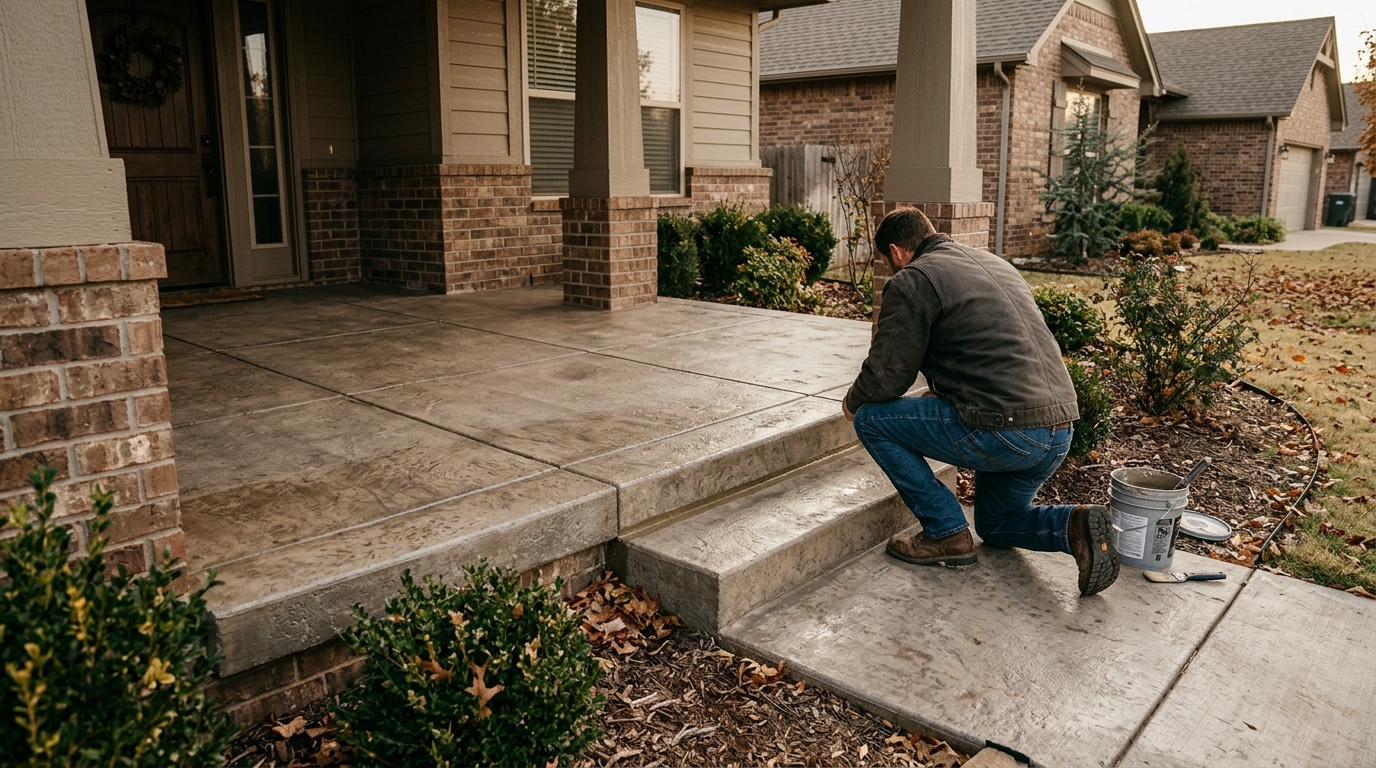
Concrete porch pads in Oklahoma City require seasonal sealing, crack monitoring, and proper drainage management to withstand extreme temperature swings and heavy rainfall. Askews Concrete Connections emphasizes that proactive care prevents the freeze-thaw cycles common in the metro area from compromising structural integrity. By addressing minor surface issues early, homeowners can extend the lifespan of their flatwork significantly.
Understanding the Oklahoma Climate Impact
The climate in the Oklahoma City metro area presents unique challenges for concrete flatwork. Freeze-thaw cycling is the primary enemy of concrete durability in this region. When water penetrates the concrete and freezes, it expands, causing internal pressure that leads to cracking and spalling. This process accelerates during the transition from winter to spring.
Concrete is a porous material by nature. Without proper protection, it absorbs moisture from rain and snow. In Oklahoma, where precipitation can be intense and sudden, this absorption is a constant risk. The implication is that passive durability is not enough. Active maintenance is required to seal the pores and prevent water intrusion. Homeowners must view their porch pad as a dynamic structure that interacts with the environment daily.
The Critical Role of Sealing
Sealing is the most effective defense against moisture damage. Penetrating sealers are generally preferred for flatwork like porch pads because they soak into the concrete rather than sitting on the surface. This allows the concrete to breathe while blocking liquid water. Film-forming sealers, on the other hand, create a barrier on top but can peel or trap moisture if not applied correctly.
Timing is crucial for sealing. The concrete must be fully cured, which typically takes 28 days, before the first application. After that, resealing is recommended every two to three years, depending on the sealer type and wear. A concrete pad that has not been sealed in five years is likely absorbing water freely. This leads to faster deterioration. Regular sealing maintains the aesthetic appeal as well, keeping the color consistent and preventing efflorescence, which is the white powdery residue left by evaporating water.
Managing Drainage and Water Flow
Water that pools on a concrete pad is a sign of poor slope or drainage. Positive drainage is essential for any flatwork installation. The pad should slope away from the house foundation and toward a designated drainage area. If water sits on the porch pad for more than 24 hours, it is likely to seep into the concrete and the sub-base below.
Homeowners should inspect the area around the pad after heavy rains. Look for standing water or erosion in the soil adjacent to the concrete. If the soil erodes, it can undermine the edge of the pad, leading to settling. Correcting drainage issues often involves regrading the surrounding soil or installing a French drain. Ignoring these issues forces the concrete to bear hydrostatic pressure, which can cause lifting or cracking at the edges.
Crack Inspection and Repair
Small cracks are inevitable in concrete, but their size and location determine the urgency of repair. Control joints are intentional cuts made in the concrete to control where cracking occurs. These joints should be inspected regularly. If a crack appears in the middle of a slab rather than at a joint, it indicates a structural issue or settlement.
Cracks wider than 1/8 inch should be addressed promptly. Water entering these cracks will freeze and expand, widening the gap. Simple repairs involve cleaning the crack and filling it with a flexible polyurethane sealant. This material moves with the concrete, accommodating thermal expansion and contraction. For larger structural cracks, professional assessment is necessary. Askews Concrete Connections can evaluate whether a crack requires structural reinforcement or if it is merely cosmetic.
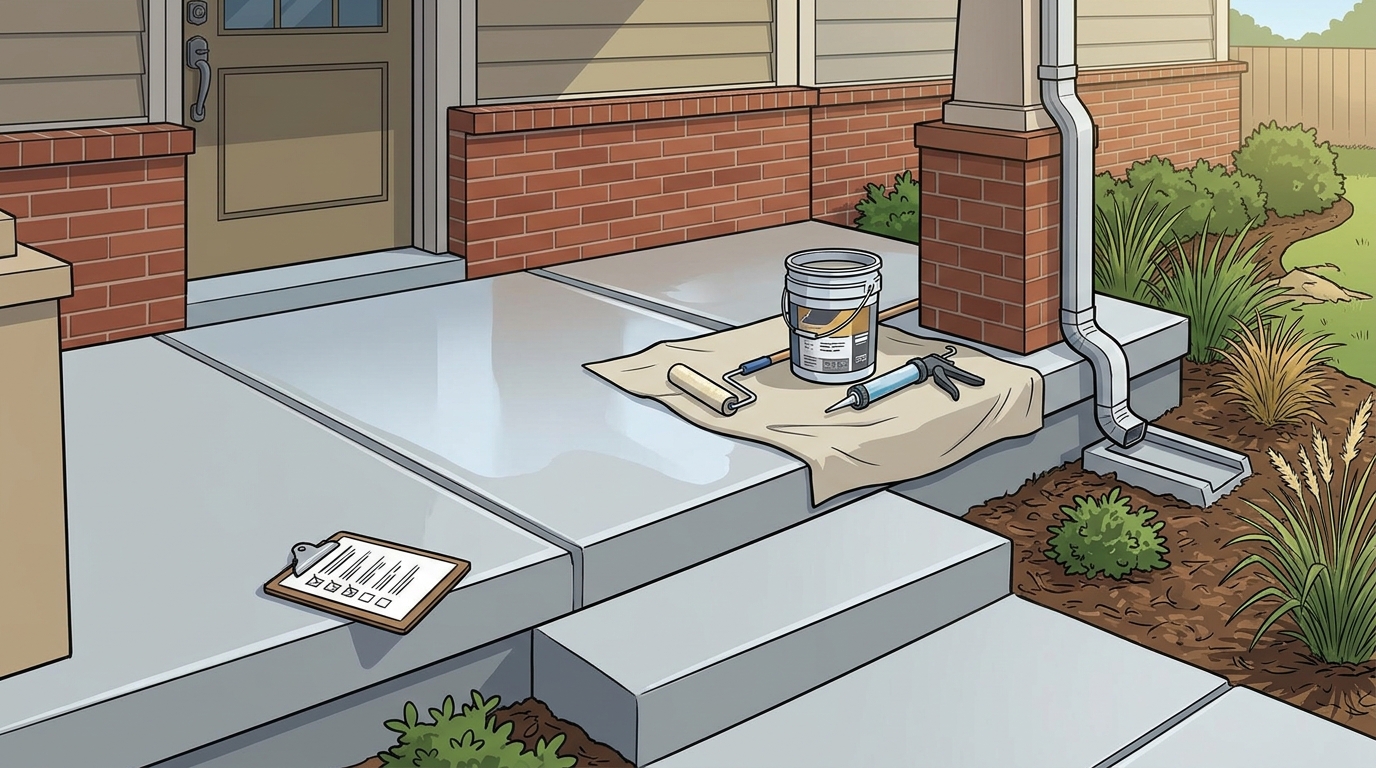
Surface Cleaning and Debris Management
Keeping the surface clean is often overlooked but is vital for long-term health. Organic debris like leaves and dirt can trap moisture against the concrete surface. This creates a damp environment that encourages mold and algae growth. These organisms can stain the concrete and weaken the surface layer over time.
Regular sweeping and occasional pressure washing are effective maintenance practices. However, pressure washing must be done carefully. High-pressure water can etch the surface or force water into existing cracks. Use a moderate pressure setting and keep the nozzle at a distance. Removing debris before winter is particularly important. It prevents the accumulation of ice and snow, which can exert additional weight and pressure on the pad. A clean surface also makes it easier to spot new cracks or signs of settling.
Key Takeaways
- Seal your concrete porch pad every two to three years to prevent moisture intrusion.
- Ensure positive drainage so water flows away from the pad and the house foundation.
- Inspect control joints and cracks regularly, repairing any gaps wider than 1/8 inch.
- Remove organic debris to prevent mold, algae, and trapped moisture.
- Use flexible sealants for crack repair to accommodate thermal movement.
- Monitor the surrounding soil for erosion that could undermine the pad edges.
- Pressure wash gently to clean the surface without damaging the concrete.
Frequently Asked Questions
How often should I seal a concrete porch pad in Oklahoma?
It is recommended to seal a concrete porch pad every two to three years. The exact frequency depends on the type of sealer used and the level of foot traffic. Penetrating sealers generally last longer than film-forming sealers. Always test a small area to see if the sealer is still effective before applying a new coat.
What is the best way to fix a small crack in concrete?
For small cracks, clean the area thoroughly and apply a flexible polyurethane sealant. This material is designed to stretch and compress with the concrete as it expands and contracts with temperature changes. Avoid using rigid cement-based fillers for cracks, as they can break off when the concrete moves.
Does concrete need to be sealed before the first winter?
Yes, sealing before the first winter is highly recommended. This ensures the concrete is protected against freeze-thaw cycles. If the concrete was poured in late summer or fall, it should be fully cured and sealed before temperatures drop below freezing. This prevents water from penetrating and freezing inside the pores.
Can I use a pressure washer on a concrete porch pad?
Yes, but use caution. High-pressure water can etch the surface or force water into cracks. Use a moderate pressure setting and keep the nozzle at least 12 inches away from the surface. Start with a lower pressure and increase only if necessary. Avoid directing the spray directly into existing cracks.
How do I know if my concrete pad has drainage issues?
Look for standing water on the pad after rain. If water pools in any area for more than 24 hours, the slope may be insufficient. Also check for erosion in the soil around the edges of the pad. If the soil is washing away, it can undermine the concrete, leading to settling and cracking.
Conclusion
Maintaining a concrete porch pad in Oklahoma City is a manageable task that pays off in longevity and aesthetics. By focusing on sealing, drainage, and crack repair, you protect your investment against the region's harsh climate. Askews Concrete Connections is ready to help you with any concrete needs, from new pours to maintenance advice. Call today for a free estimate or to discuss your specific maintenance concerns.