
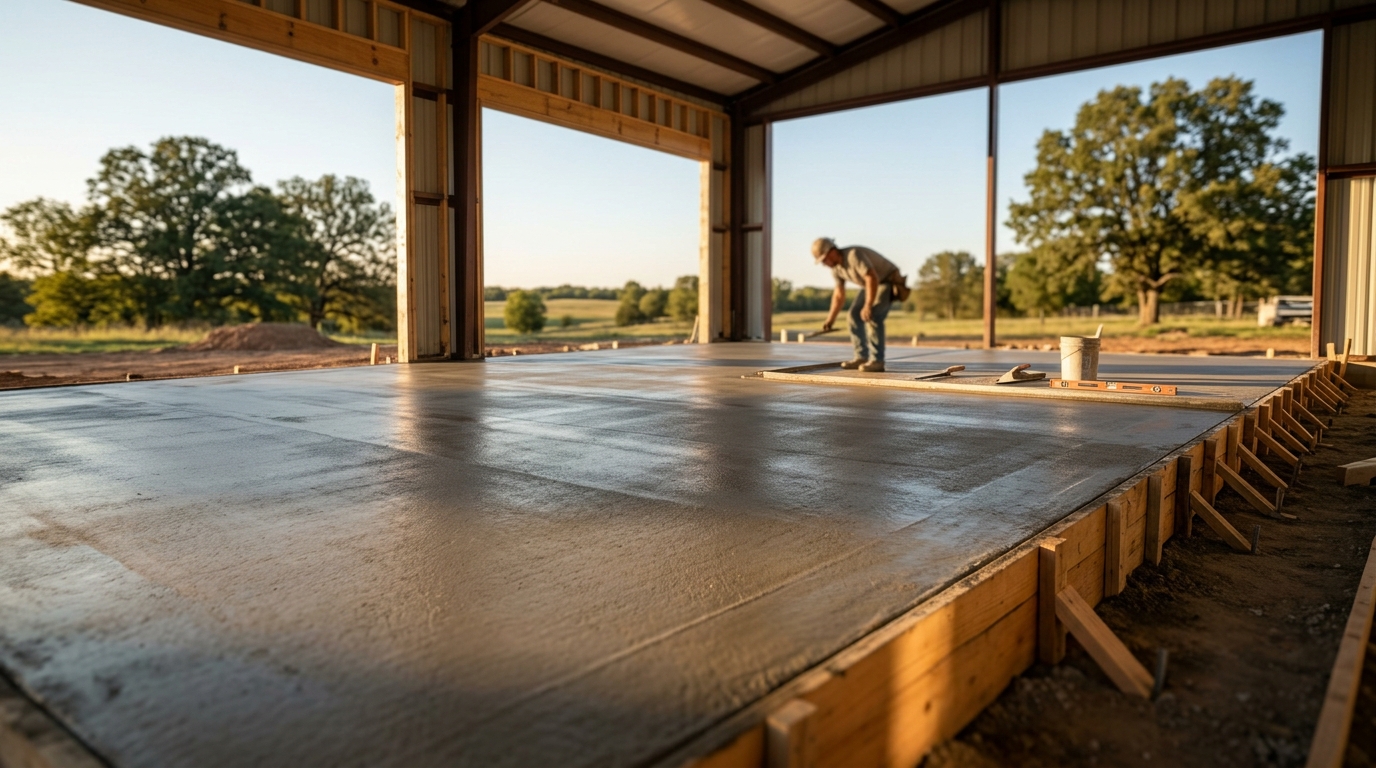
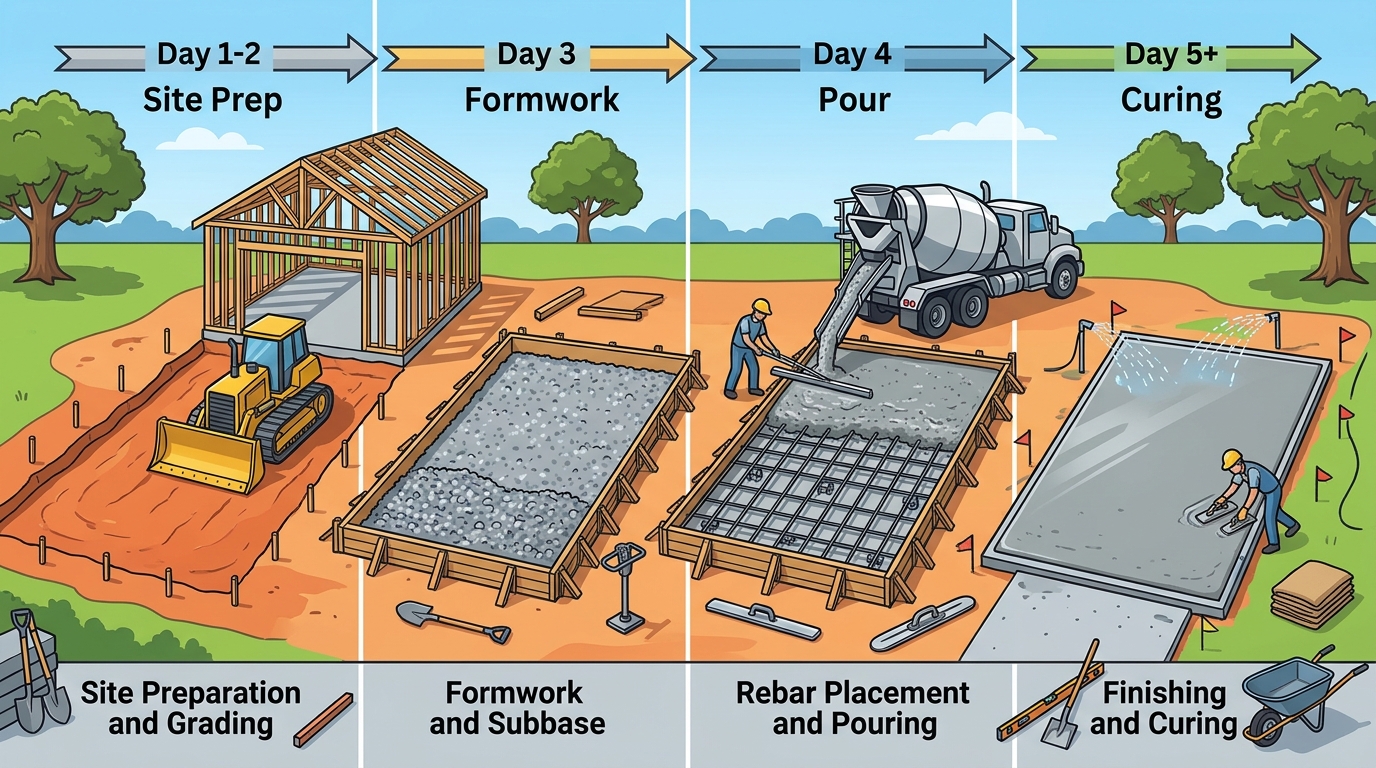
Pouring a concrete garage slab typically takes three to five days from site preparation to final curing. The process involves grading, formwork, rebar placement, and the pour itself. Askews Concrete Connections manages this sequence to ensure structural integrity and proper drying times for your Oklahoma City or McLoud property.
Site Preparation and Grading
Proper grading ensures water drains away from the structure. In the Oklahoma metro area, soil composition can vary significantly between properties. The team checks for compaction levels before proceeding. If the ground is too soft, additional stabilization may be required. This phase sets the foundation for the entire project. For additional details, review the .
Formwork and Rebar Installation
Once the ground is ready, the crew installs wooden or metal forms. These forms define the shape and thickness of the slab. A garage slab is typically four inches thick for residential applications. The forms must be perfectly level and square. Any deviation here will result in a warped finished surface. For additional details, review the Customer Experience.
Reinforcement is the next critical step. Steel rebar or wire mesh is placed within the forms. This reinforcement is a grid of steel that provides tensile strength to the concrete. It prevents the slab from cracking under load or temperature changes. The crew ties the rebar to specific elevations to ensure it sits in the middle of the pour. This installation phase usually takes half a day to a full day. For additional details, review the Frequently Asked Questions.
The Concrete Pour
The pour is among the most visible part of the process. Concrete trucks deliver the mix to the site. The crew spreads the concrete using rakes and shovels. They then use a screed to level the surface. This action is a smoothing technique that ensures the slab is flat and at the correct height. The pour itself often takes four to eight hours for a standard two-car garage.
Weather conditions heavily influence this phase. Extreme heat or cold requires specific admixtures in the concrete mix. The crew monitors the temperature to ensure proper hydration. They finish the surface using trowels to create a smooth, dense top layer. This finishing step is crucial for durability and appearance.
Curing and Form Removal
Full structural strength takes longer. A concrete slab reaches 70 percent of its design strength in about seven days. It reaches full strength in 28 days. You should avoid parking heavy vehicles on the slab until it has cured sufficiently. This timeline ensures the slab can handle the weight of cars without damage.
Final Inspection and Handover
The final phase involves a thorough inspection. The crew checks for any surface defects or cracks. They may apply sealants if requested. The site is cleaned of all debris and equipment. A final walkthrough ensures the slab meets the agreed-upon specifications. This step usually takes a few hours on the last day of the project.
Askews Concrete Connections provides a clear schedule for each phase. We communicate milestones with the homeowner throughout the process. This transparency helps you plan around the construction activity. The total timeline from start to finish is typically under one week for the active work, with curing continuing in the background.
Key Takeaways
- Site preparation and grading take one to two days.
- Formwork and rebar installation require half a day to a full day.
- The concrete pour itself lasts four to eight hours.
- Forms are removed after 24 to 48 hours.
- Full structural strength is achieved in 28 days.
- Weather conditions can impact the pour and curing times.
- Proper curing prevents surface cracking and ensures durability.
Frequently Asked Questions
How long does it take to pour a concrete garage slab?
The active construction phase takes three to five days. The pour itself is a single day event. Curing continues for several weeks to reach full strength.
Can I drive on the slab immediately after the pour?
No. You should wait at least 24 to 48 hours for light foot traffic. Wait seven days before parking a car. Wait 28 days for full structural strength.
What is the most common cause of slab cracking?
Inadequate curing is a primary cause. Rapid moisture loss leads to shrinkage cracks. Proper curing compounds or wet burlap prevent this issue.
Does weather affect the concrete pour?
Yes. Extreme heat, cold, or rain can delay the pour. The crew monitors weather forecasts to schedule the optimal day for the pour.
How thick should a garage slab be?
Residential garage slabs are typically four inches thick. This thickness provides sufficient strength for vehicle loads. Heavier loads may require thicker slabs or additional reinforcement.
Who handles the site cleanup?
Plan Your Slab Project
Understanding the timeline helps you prepare for the construction process. Askews Concrete Connections provides detailed schedules and clear communication. We ensure your garage slab is built to last. to discuss your project and get a free estimate.