
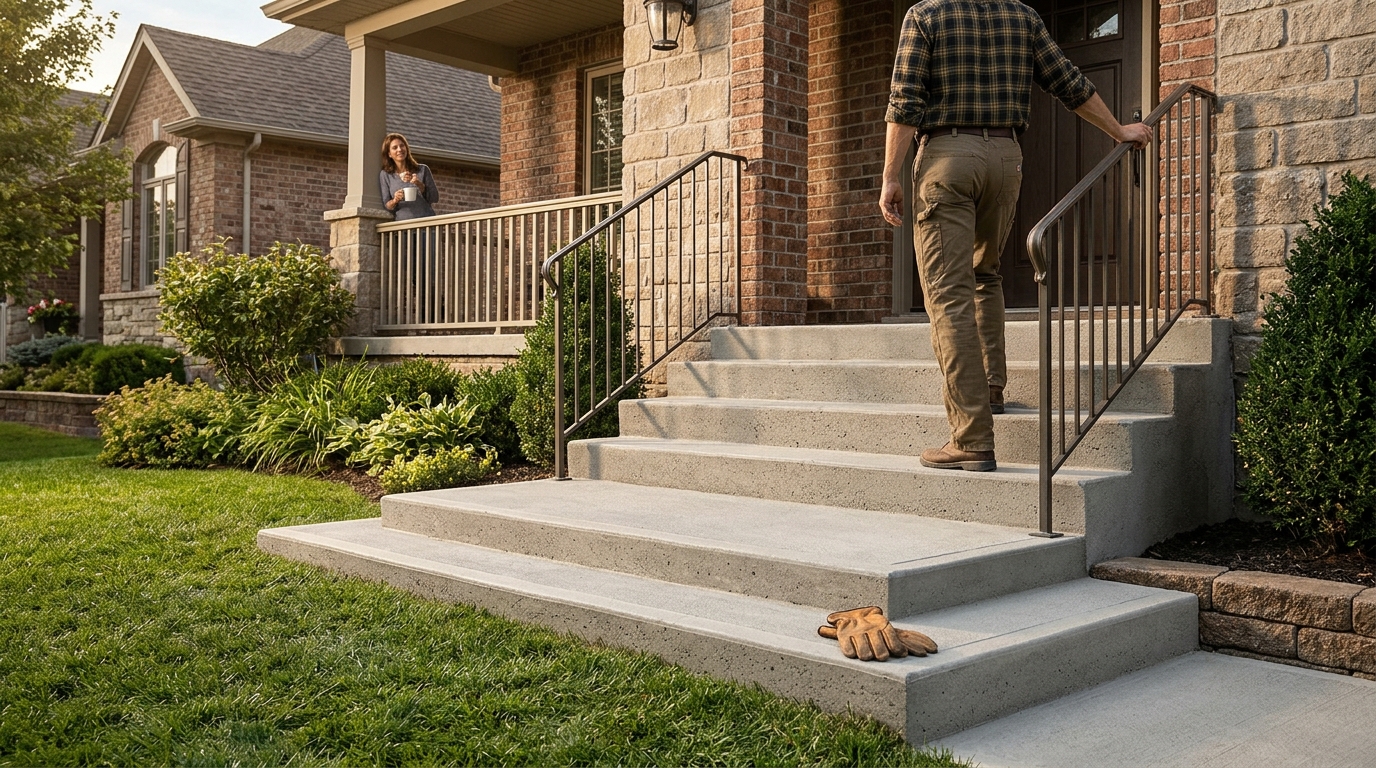
Replacing concrete steps involves removing the old structure, preparing a stable base, and pouring new reinforced concrete. The process typically takes two to three days, including curing time. Homeowners should expect a professional assessment, precise measurements, and a finished surface that matches their architectural style. Askews Concrete Connections specializes in this work across Oklahoma City and McLoud, ensuring every step is built to last. For additional details, review the .
The Initial Assessment and Planning
Tear-Out and Site Preparation
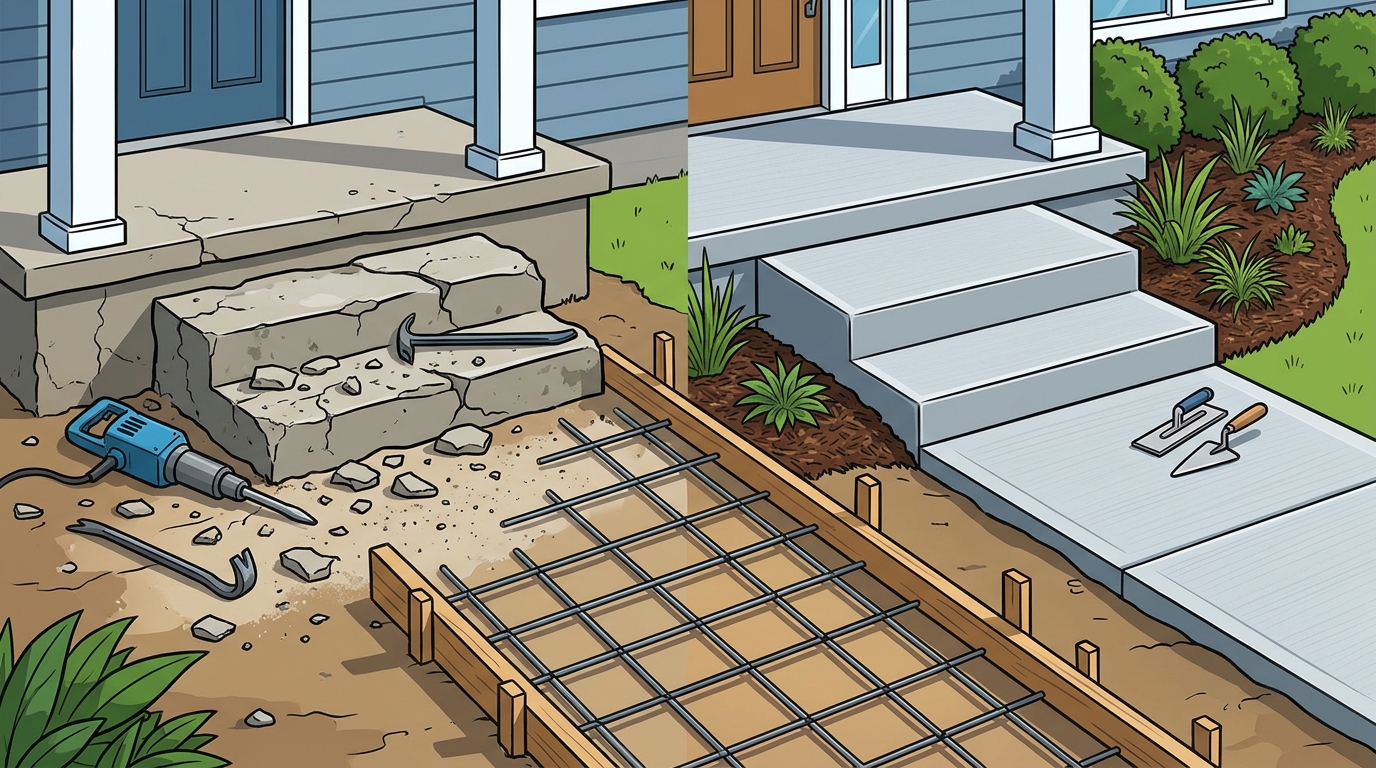
Once the plan is approved, the old concrete is removed. This process is often called tear-out. It requires heavy equipment or manual labor to break up and haul away the existing steps. The depth of the removal is crucial. The new steps must sit at the correct height to align with the door threshold. If the old steps were too low, the new ones may need to be deeper. Proper preparation also involves checking for underground utilities. Marking gas, water, and electric lines prevents costly damage during excavation. A professional crew ensures the area is clear and safe before any new material is placed. For additional details, review the Customer Experience.
Formwork and Reinforcement
After the base is prepared, the crew builds the forms. Formwork is the mold that holds the wet concrete in the desired shape. It must be sturdy and level. Any shift in the forms during the pour will result in uneven steps. Inside the forms, the contractor places reinforcement. Reinforcement is steel rebar or wire mesh that adds tensile strength to the concrete. Concrete is strong in compression but weak in tension. The rebar prevents the steps from cracking under the weight of foot traffic or soil movement. The spacing and size of the rebar depend on the load the steps will bear. For residential steps, standard rebar is usually sufficient, but the placement must be precise. For additional details, review the Frequently Asked Questions.
The Pour and Finishing Process
The pour is among the most visible part of the project. The concrete is delivered by truck and pumped into the forms. The crew works quickly to spread and level the material. They use tools to smooth the surface and create the desired texture. A broom finish is common for slip resistance. The finishing process must happen before the concrete begins to set. This window is short, often only a few hours. Weather plays a major role here. Rain can wash out the surface, while extreme heat can cause rapid drying and cracking. A skilled crew monitors the conditions and adjusts their workflow accordingly. Askews Concrete Connections has the experience to handle various weather scenarios in the Oklahoma climate. For additional details, review the About.
Curing and Final Inspection
After the concrete is poured, it must cure. Curing is the chemical process that allows concrete to gain strength. It takes about 28 days to reach full strength, but the steps can usually be walked on after 24 to 48 hours. The crew may use curing compounds or wet burlap to keep the surface moist. This prevents shrinkage cracks. Once the concrete is strong enough, the forms are removed. The final inspection checks for levelness, alignment, and surface quality. Any minor imperfections can be addressed at this stage. The homeowner should walk the steps to ensure they feel solid and safe. The project is complete when the site is cleaned and the debris is hauled away.
Key Takeaways
- Assessment is critical to identify the root cause of step failure.
- Tear-out depth must be precise to match the door threshold height.
- Reinforcement with rebar prevents cracking under load.
- Formwork stability ensures the steps are level and straight.
- Curing time is essential for achieving full concrete strength.
- Professional finishing provides a safe, slip-resistant surface.
Frequently Asked Questions
How long does it take to replace concrete steps?
The active work usually takes one to two days. However, the concrete needs 24 to 48 hours to cure before it can be walked on. Full strength is reached in about 28 days.
Do I need a permit for concrete step replacement?
In many areas, minor concrete work does not require a permit. However, local codes vary. A professional contractor can check the specific requirements for your location in Oklahoma City or McLoud.
Can I use the steps immediately after the pour?
No. You should wait at least 24 to 48 hours before walking on the new steps. This allows the concrete to gain initial strength and prevents surface damage.
What causes concrete steps to crack?
How much does it cost to replace concrete steps?
Costs vary based on size, complexity, and local labor rates. A free estimate from a local contractor provides the most accurate figure for your specific project.
Should I seal the new concrete steps?
Sealing is optional but recommended. It protects the concrete from stains and water damage. It can also enhance the color of the concrete.
What is the lifespan of concrete steps?
With proper installation and maintenance, concrete steps can last 25 to 50 years. Regular inspection and sealing can extend their life.
Start Your Project with Confidence
Replacing your concrete steps is a significant investment in your home's safety and curb appeal. By understanding the process, you can make informed decisions and set realistic expectations. Askews Concrete Connections is ready to help you through every step of the journey. We provide free estimates and reliable service across the Oklahoma City metro. To plan your visit, today.