
Key Cost Drivers for Porch Pads
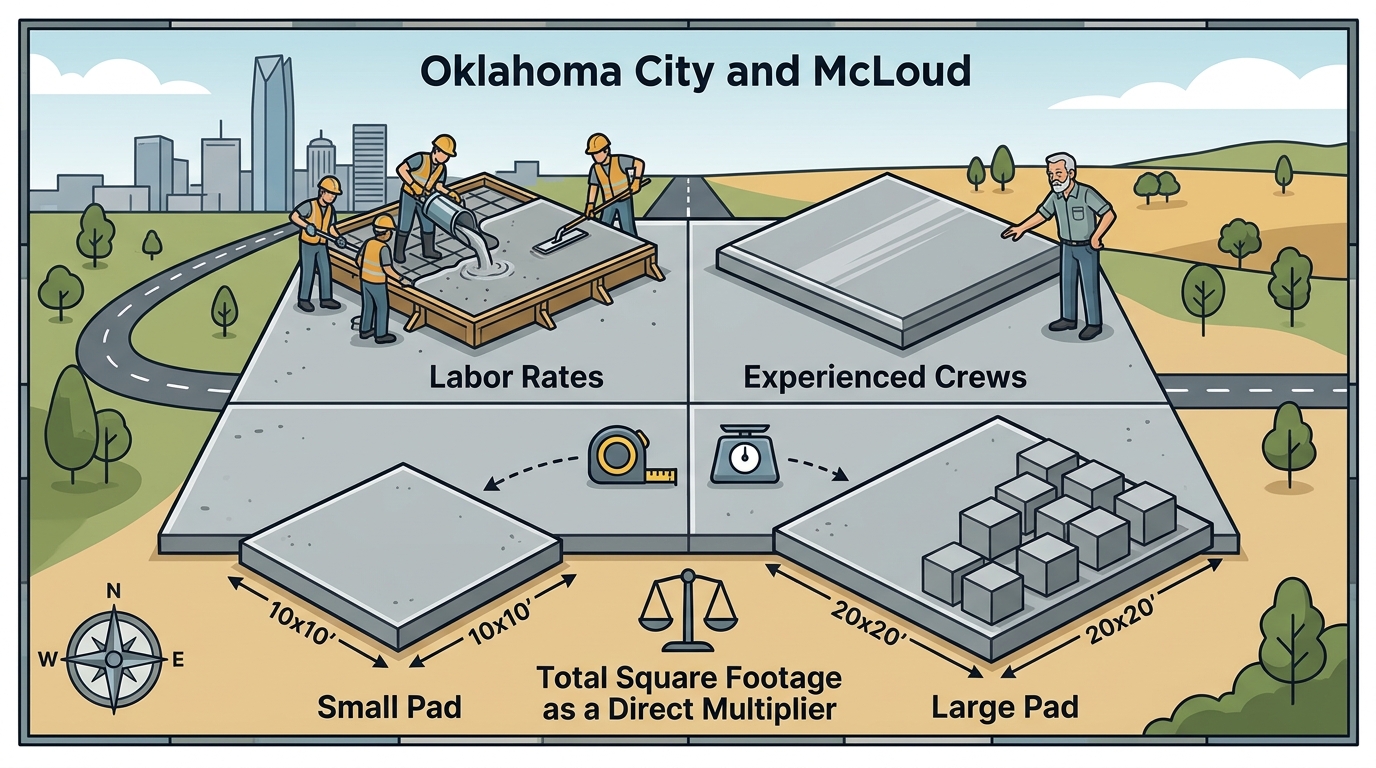
Labor rates in the Oklahoma City and McLoud areas reflect local demand and skill availability. Experienced crews charge more but deliver higher quality finishes. The total square footage is among the most direct multiplier. A 10x10 foot pad costs significantly less than a 20x20 foot pad. However, larger pads often have a lower per-square-foot cost due to efficiency. This is known as economies of scale in construction. For additional details, review the Customer Experience.
Size and Thickness
Material Specifications and Quality
Reinforcement is another key specification. Wire mesh is a common and affordable option. It helps control cracking. Fiber reinforcement is another choice. It improves tensile strength. Rebar is among the most expensive but strongest option. It is rarely needed for standard covered porches. However, it may be required for larger or heavier structures. Askews Concrete Connections advises clients on the right reinforcement for their specific load requirements. For additional details, review the Frequently Asked Questions.
Concrete Mix Options
Site Preparation Impact
Site preparation is often the most variable cost component. It involves excavating, grading, and compacting the soil. A flat, stable site requires minimal prep. A sloped or rocky site requires more work. Excavation depth is determined by the final slab height. You must account for the 4-inch slab plus the subbase. The subbase is usually 4 to 6 inches of compacted gravel. This layer provides drainage and stability. For additional details, review the About.
Drainage is a critical consideration. Water pooling under a slab causes heaving and cracking. Proper grading ensures water flows away from the structure. This protects the foundation and the slab. Poor drainage is a leading cause of concrete failure. Investing in proper site prep saves money in the long run. It prevents costly repairs later.
Excavation and Grading
Manual excavation is labor-intensive and expensive. Mechanical excavation is faster and cheaper. The choice depends on site access and size. Grading must be precise. A 1% slope is often recommended. This ensures water flows away from the house. Compacting the subgrade is essential. Loose soil leads to settlement. Settlement causes cracks in the concrete.
Finishing and Sealing
Sealing is a recommended addition. It protects the concrete from stains and moisture. Penetrating sealers are the most common. They last 3 to 5 years. Film-forming sealers offer more protection. They last 1 to 3 years. Sealing adds a small cost upfront. It saves significant money on maintenance later. It extends the life of your investment.
Finish Types
Smart Budgeting Tips
Get multiple estimates to compare prices. Ensure each estimate includes the same scope of work. Compare line items, not just the total. Look for hidden costs. Excavation, hauling, and disposal are often separate line items. Clarify what is included in the base price. This prevents surprises later. A detailed estimate helps you budget accurately.
Time your project wisely. Spring and fall are peak seasons. Prices may be higher due to demand. Winter is off-season. Prices may be lower. However, weather can delay the project. Plan for potential delays. Budget for contingencies. A 10% contingency fund is wise. It covers unexpected issues. This ensures your project stays on budget.
Estimate Comparison
Compare estimates from at least three contractors. Ensure they are licensed and insured. Check their references and reviews. Look for experience with similar projects. Ask about their warranty. A good contractor stands behind their work. A clear contract is essential. It outlines the scope, timeline, and payment terms. Protect yourself with a written agreement.
Key Takeaways
- Site preparation is a major cost variable. Sloped or rocky sites cost more.
- 3,000 PSI concrete is the standard for residential porches.
- Broom finish is the most affordable and slip-resistant option.
- Sealing adds a small cost but extends the life of the slab.
- Get multiple detailed estimates to compare line items.
Frequently Asked Questions
How thick should a concrete porch pad be?
What is the cost of concrete per square foot in Oklahoma City?
Do I need a permit for a concrete porch pad?
Permit requirements vary by local jurisdiction. Check with your city or county building department. Some areas require permits for structural work. Others do not. A licensed contractor can guide you through the process.
How long does it take to pour a concrete porch pad?
A standard porch pad takes 1 to 2 days to pour. Curing takes 28 days for full strength. You can walk on it after 24 to 48 hours. Heavy furniture should wait 7 days. Follow the contractor's curing instructions.
What is the difference between 3,000 PSI and 4,000 PSI concrete?
Should I seal my concrete porch pad?
Yes, sealing is recommended. It protects the concrete from stains and moisture. It extends the life of the slab. Penetrating sealers are the most common option. They last 3 to 5 years.
How do I maintain a concrete porch pad?
Sweep the pad regularly to remove debris. Wash it with water and a mild detergent. Avoid harsh chemicals. Reapply sealant every 3 to 5 years. Promptly repair any cracks to prevent water intrusion.
Conclusion
Budgeting for a concrete porch pad requires careful planning. Consider size, thickness, and site conditions. Choose the right material and finish. Get multiple estimates to compare prices. Askews Concrete Connections offers free estimates and expert guidance. Contact them today to plan your project.