
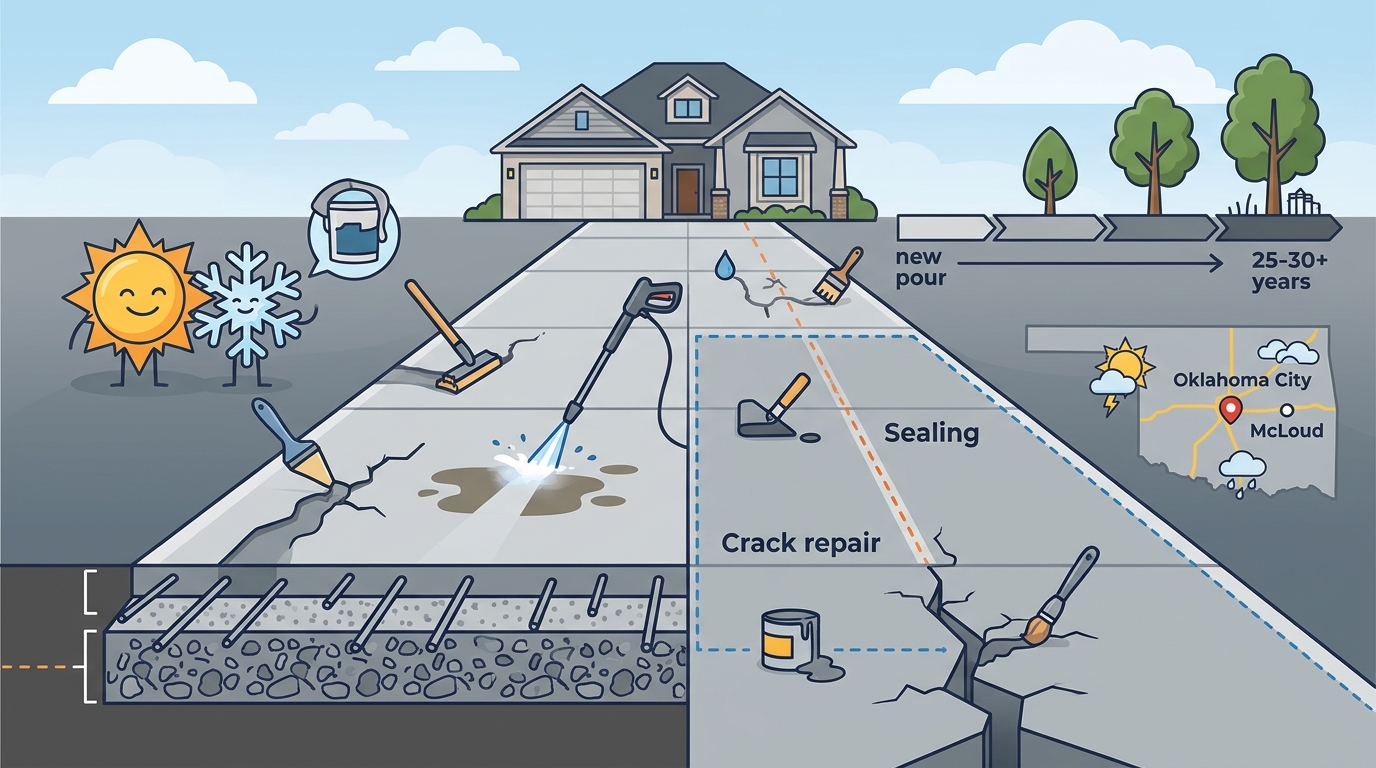
A properly installed concrete driveway typically lasts between 25 and 30 years, though some last longer with consistent care. The primary factors affecting longevity are the quality of the initial pour, the local climate, and the frequency of maintenance. In the Oklahoma City and McLoud area, homeowners must account for freeze-thaw cycles and heavy sun exposure. Askews Concrete Connections emphasizes that a driveway is a long-term investment that requires periodic attention to maintain its structural integrity and aesthetic appeal.
Factors That Determine Driveway Longevity
The Impact of Climate and Weather
Weather conditions play a significant role in how long a concrete driveway lasts. Freeze-thaw cycles are a major cause of concrete deterioration. When water seeps into small cracks and freezes, it expands and pushes the concrete apart. This process, known as spalling, can weaken the slab over time. Oklahoma experiences a wide range of temperatures, from freezing winters to hot summers. The thermal expansion and contraction of concrete can also cause stress. To mitigate these effects, contractors use control joints. These are intentional cuts made in the concrete to control where cracks form. Without control joints, the concrete may crack randomly in weak areas. Homeowners in the Oklahoma City metro should be aware that their driveways will face these environmental stresses. Regular inspection for early signs of cracking is crucial. Catching small cracks before they widen can prevent more extensive damage. This proactive approach helps extend the life of the driveway significantly. For additional details, review the Customer Experience.
Essential Maintenance Practices
Maintenance is the key to keeping a concrete driveway in good shape. Cleaning the surface regularly removes dirt, oil, and debris that can degrade the concrete. Oil stains, in particular, can penetrate the surface and cause discoloration. Using a concrete cleaner and a pressure washer can restore the appearance of the driveway. However, homeowners should use caution with pressure washers. High-pressure water can erode the surface if used too closely. It is best to use a moderate pressure setting and keep the nozzle at a safe distance. Sealing the concrete is another critical maintenance task. A concrete sealer is a protective coating that repels water and stains. Sealing helps prevent moisture from entering the concrete, which reduces the risk of freeze-thaw damage. It also makes the driveway easier to clean. Most experts recommend sealing a new driveway after the first year. After that, resealing every two to three years is sufficient. The type of sealer used can affect the appearance. Penetrating sealers provide protection without changing the look, while film-forming sealers can add a slight sheen. Homeowners should choose a sealer that fits their aesthetic preferences and maintenance goals.
Repairing Cracks and Damage
Even with good maintenance, concrete driveways will develop cracks over time. Small hairline cracks are normal and do not necessarily indicate structural failure. However, they should be addressed to prevent water infiltration. Concrete crack filler is a simple product that homeowners can use to seal small cracks. This filler prevents water from entering and causing further damage. For larger cracks or structural issues, professional repair may be necessary. A professional can assess the extent of the damage and recommend the appropriate repair method. In some cases, a section of the driveway may need to be cut out and replaced. This is a more involved process that requires specialized tools and expertise. Homeowners should not attempt major repairs themselves. The risk of improper repair can lead to more significant problems down the line. Working with a qualified contractor ensures that the repair is done correctly and lasts. Askews Concrete Connections offers tear-out and replacement services for driveways that have reached the end of their useful life. This service ensures that the new driveway is installed with proper base preparation and concrete quality.
When to Consider Replacement
There are signs that indicate a driveway may need replacement rather than repair. Significant settling or heaving of the slab is a major red flag. This suggests that the base has failed and cannot support the concrete. Extensive cracking that covers a large portion of the driveway is another sign. If the cracks are wide and deep, they may compromise the structural integrity of the slab. Spalling, where the surface of the concrete breaks away, is also a concern. This can expose the rebar or aggregate, leading to further deterioration. Homeowners should evaluate the overall condition of their driveway regularly. If the cost of repairs exceeds a certain percentage of the cost of replacement, it may be more economical to replace the driveway. This decision depends on the age of the driveway and the extent of the damage. A professional assessment can provide clarity on the best course of action. Replacing a driveway is a significant investment, but it ensures a durable and attractive surface for years to come. Homeowners should plan for this eventual replacement as part of their long-term maintenance strategy.
Key Takeaways
- A well-installed concrete driveway typically lasts 25 to 30 years.
- Proper base preparation is critical for preventing settlement and cracking.
- Freeze-thaw cycles and thermal expansion are major factors in concrete deterioration.
- Regular cleaning and sealing are essential maintenance tasks.
- Small cracks should be sealed promptly to prevent water infiltration.
- Significant settling or extensive cracking may indicate the need for replacement.
- Professional assessment can help determine the best repair or replacement strategy.
Frequently Asked Questions
How often should I seal my concrete driveway?
Most experts recommend sealing a new driveway after the first year. After that, resealing every two to three years is sufficient. The frequency may vary depending on the type of sealer used and the local climate conditions.
What causes concrete driveways to crack?
Cracking is caused by a combination of factors, including thermal expansion and contraction, freeze-thaw cycles, and settlement of the base. Control joints are used to manage where cracks form, but some cracking is inevitable over time.
Can I repair a cracked driveway myself?
Small hairline cracks can be repaired by homeowners using concrete crack filler. However, larger cracks or structural issues require professional repair. Attempting major repairs without proper tools and expertise can lead to further damage.
How long does a concrete driveway last in Oklahoma?
In Oklahoma, a well-maintained concrete driveway can last 25 to 30 years. The local climate, with its freeze-thaw cycles and expansive soils, requires careful attention to base preparation and maintenance.
What is the best way to clean a concrete driveway?
Regular cleaning with a concrete cleaner and a pressure washer is effective. Use a moderate pressure setting to avoid eroding the surface. Oil stains may require specialized cleaners to remove effectively.
When should I replace my driveway instead of repairing it?
Consider replacement if the driveway has significant settling, extensive cracking, or widespread spalling. If the cost of repairs exceeds a certain percentage of the cost of replacement, it may be more economical to replace the driveway.
Conclusion
A concrete driveway is a durable and long-lasting investment for your home. By understanding the factors that affect its lifespan and committing to regular maintenance, you can ensure that it remains in good shape for decades. Proper base preparation, consistent cleaning, and timely sealing are the cornerstones of driveway care. When damage occurs, addressing it promptly can prevent more extensive issues. For homeowners in the Oklahoma City and McLoud area, Askews Concrete Connections provides expert guidance and services for new pours and tear-out replacements. Contact them for a free estimate to discuss your driveway needs and ensure a quality installation that stands the test of time.