
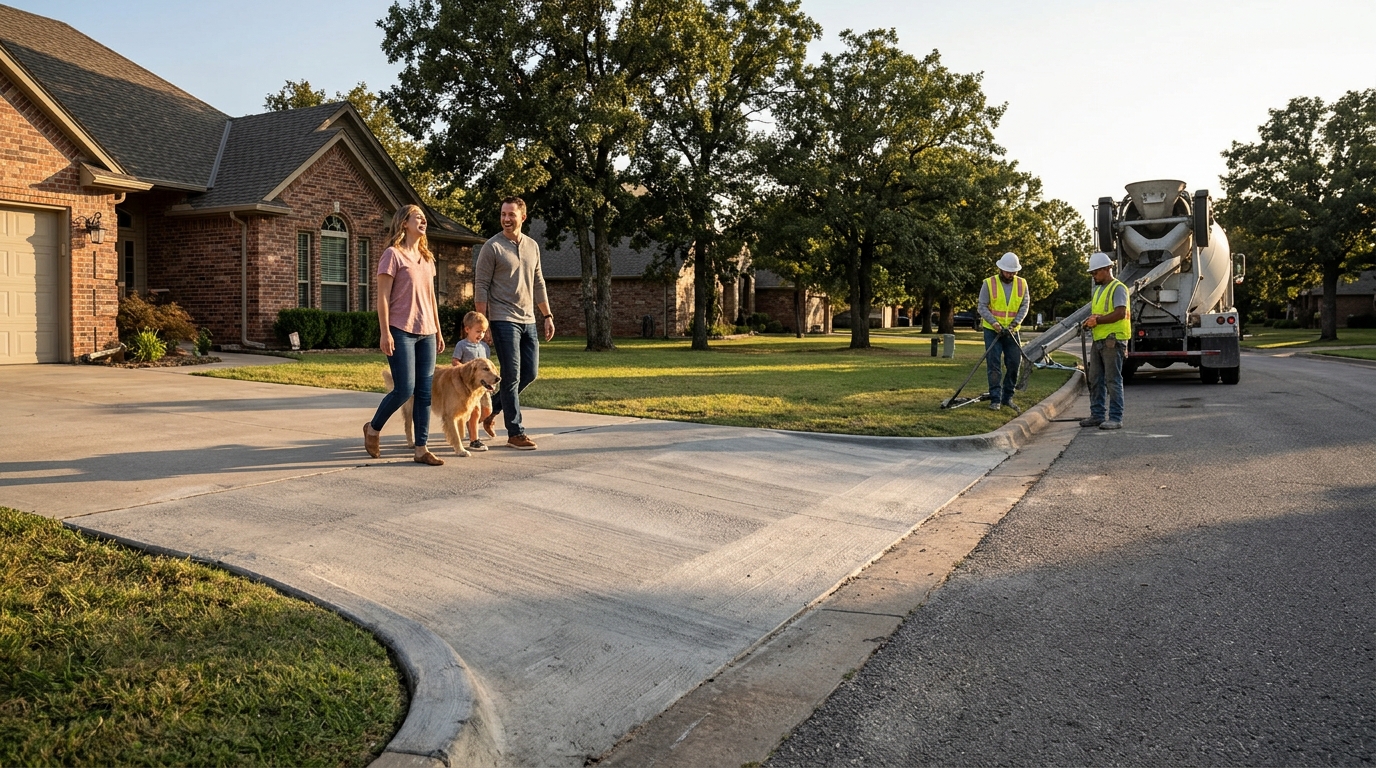
Homeowners in Shawnee, Oklahoma, need reliable concrete contractors for driveways, patios, and slabs. Askews Concrete Connections serves the Shawnee and Oklahoma City metro area with owner-supervised flatwork. This guide explains how to choose a contractor, verify credentials, understand costs, and avoid common mistakes.
How to Choose a Concrete Contractor
Choosing the right contractor is the most critical step in your project. A good contractor prioritizes communication, transparency, and quality materials. You want a team that treats your property with respect and stands behind their work.
Owner Involvement
One of the strongest indicators of quality is owner involvement. When the owner is on every job, as is the case with Askews Concrete Connections, you get direct accountability. You are not dealing with a distant project manager; you are dealing with the person responsible for the final result.
Experience and Local Knowledge
Concrete work is highly dependent on local soil conditions and weather patterns. A contractor with deep roots in the Oklahoma City and Shawnee area understands how the local clay soil behaves. This experience prevents issues like settling and cracking that plague inexperienced crews.
Service Range
Look for a contractor who offers a full range of flatwork services. Askews Concrete Connections handles driveways, patios, steps, and slabs. This versatility means they understand the structural requirements of different concrete applications, not just driveways.
What to Ask Before Committing
Do not sign a contract until you have asked the right questions. These questions reveal the contractor's professionalism and attention to detail.
Scope of Work
Ask for a detailed written estimate. The estimate should specify the square footage, thickness of the pour, and the type of finish. It should also clarify what is included in the price, such as tear-out of old concrete and disposal fees.
Timeline and Logistics
Ask about the expected start date and the duration of the pour. Concrete work is weather-dependent. A reliable contractor will give you a realistic timeline and keep you updated if weather delays occur.
Warranty and Support
How to Verify Credentials
Verifying a contractor's claims is essential for protecting your investment. In Oklahoma, concrete contractors are not required to hold a specific state license, but they must be bonded and insured.
Insurance Verification
Always request a Certificate of Insurance (COI). This document proves the contractor carries general liability and workers' compensation insurance. If a contractor refuses to provide this, walk away. You do not want to be liable for injuries or property damage.
References and Reviews
Check online reviews and ask for local references. Look for patterns in the feedback. Are they on time? Is the finish quality consistent? Do they clean up properly? Askews Concrete Connections builds its reputation on quality work and reliable service, which is reflected in its local standing.
The Concrete Pouring Process
Understanding the process helps you manage expectations. A professional pour involves several distinct phases.
Site Preparation
The process begins with excavation and grading. The ground must be compacted to prevent settling. If you are replacing an old driveway, the existing concrete is broken up and hauled away. This tear-out and replacement service is a core offering for Askews Concrete Connections.
Forming and Rebar
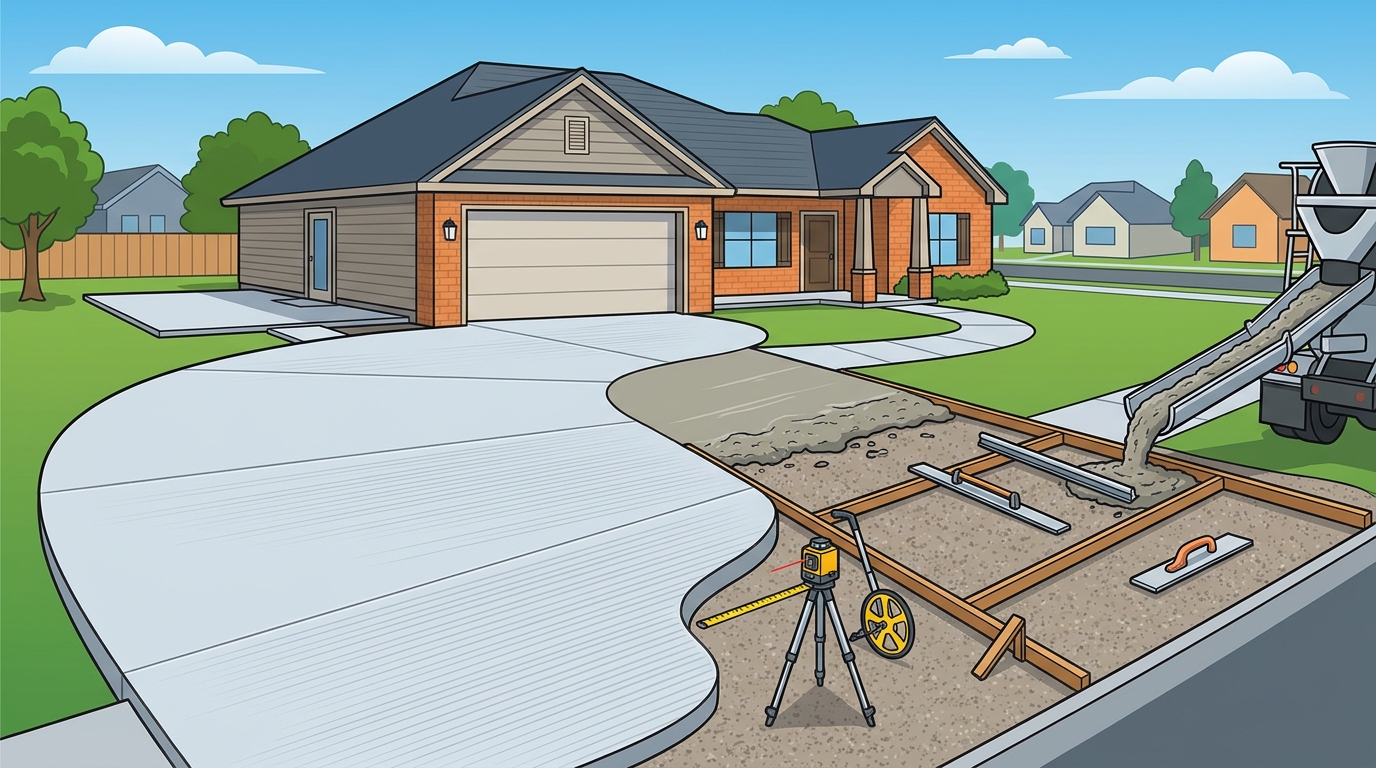
Forms are set to define the shape and thickness of the driveway. Reinforcement, such as rebar or wire mesh, is placed to add tensile strength. This step is crucial for preventing cracks.
Pouring and Finishing
The concrete is poured, leveled, and finished. The finish can be broom, smooth, or stamped. The concrete then cures for several days. During this time, the driveway must be kept dry and free of heavy traffic.
What Concrete Driveways Cost
Concrete driveway costs vary based on several factors. While specific prices depend on the project, understanding the cost drivers helps you budget effectively.
Material Costs
The price of concrete fluctuates based on aggregate availability and fuel costs. Thicker slabs cost more because they require more material. A standard residential driveway is typically 4 inches thick, but heavier loads may require 5 or 6 inches.
Labor and Complexity
Labor costs depend on the complexity of the job. A simple rectangular driveway is less expensive than one with curves, steps, or multiple levels. Tear-out and disposal add to the total cost. Askews Concrete Connections provides free estimates, so you can get an accurate figure for your specific property without obligation.
Common Mistakes to Avoid
Many driveway failures stem from avoidable mistakes during the planning and execution phases.
Inadequate Compaction
If the subgrade is not properly compacted, the concrete will settle and crack. This is a common issue in areas with expansive clay soils. A professional contractor will test and compact the soil thoroughly.
Poor Drainage
Water pooling on the driveway leads to freeze-thaw damage. Ensure the driveway is sloped away from your home and garage. Proper grading is a non-negotiable part of a quality pour.
Skipping Control Joints
Concrete shrinks as it cures. Control joints are cut into the slab to create weak points where cracking is expected. Without them, random cracks will appear. A skilled crew places these joints at the correct intervals.
Concrete Versus Alternatives
Homeowners often compare concrete to asphalt and pavers. Each option has distinct pros and cons.
| Lifespan | 20-30+ years | 15-20 years | 25+ years |
| Maintenance | Low (sealant optional) | Medium (sealant required) | Low (weeding) |
| Cost | Medium | Lower initial | Higher initial |
| Resale Value | High | Medium | High |
Specific Driveway Situations
Not all driveways are the same. The solution changes based on your specific needs.
New Construction
If you are building a new home, coordinate the driveway pour with the foundation work. This ensures proper drainage and alignment. Askews Concrete Connections handles foundations and footers, making them a one-stop shop for new builds.
Tiny Homes and Sheds
Many homeowners in Shawnee are building tiny homes or metal buildings. These structures require specific slab pads. A 30x50 metal building pad, for example, needs a different reinforcement strategy than a standard driveway. Ensure your contractor has experience with structural slabs.
Steep Slopes
Driveways on steep slopes require retaining walls or stepped designs. This adds complexity and cost. A local contractor understands the engineering challenges of the Shawnee terrain.
Rules and Protections
Understanding the rules protects you from liability and ensures compliance with local codes.
Permits
In many jurisdictions, concrete driveways do not require a permit if they are on private property and do not alter the footprint of the structure. However, if the driveway connects to a public road or involves significant grading, a permit may be required. Your contractor should know the local regulations.
Contract Protection
Always use a written contract. It should outline the scope of work, payment schedule, and timeline. Avoid paying the full amount upfront. A standard payment structure involves a deposit, a progress payment, and a final payment upon completion.
Local Specifics for Shawnee
Shawnee, Oklahoma, has unique environmental factors that affect concrete work.
Soil Conditions
The area is known for expansive clay soils. These soils swell when wet and shrink when dry. This movement can lift and crack concrete. Proper subgrade preparation is critical to mitigate this risk. A contractor familiar with the local geology will take extra steps to stabilize the base.
Weather Patterns
Oklahoma experiences extreme weather, including heavy rains and freezing temperatures. Concrete must be protected from rain during the initial curing phase. Freezing temperatures can damage fresh concrete. A local contractor will monitor the weather forecast closely and take protective measures as needed.
Timing Your Project
Timing is everything in concrete work. The season and weather conditions significantly impact the outcome.
Spring and Fall
Spring and fall are the ideal times for concrete work. The temperatures are mild, which allows for proper curing. However, these seasons are also the busiest for contractors. Book early to secure your preferred date.
Summer and Winter
Summer heat can cause concrete to dry too quickly, leading to cracking. Contractors use curing compounds and shade cloth to mitigate this. Winter work is possible but requires heated enclosures or chemical accelerators. It is more expensive and logistically complex.
Long-Term Results
A well-installed concrete driveway is a long-term asset. With proper care, it will last for decades.
Maintenance
Concrete requires minimal maintenance. You do not need to seal it as often as asphalt. However, cleaning it regularly and addressing small cracks promptly will extend its life. Sealing the concrete every few years can protect it from stains and moisture.
Resale Value
A new, well-maintained concrete driveway increases your home's curb appeal and resale value. Buyers view it as a sign of a well-kept property. It is a cost-effective way to boost your home's marketability.
Key Takeaways
- Choose a contractor with local experience and owner involvement.
- Always verify insurance and request a detailed written estimate.
- Proper subgrade compaction is critical in Shawnee's clay soil.
- Spring and fall are the best times to schedule your pour.
- Use a written contract to protect your investment.
- Regular maintenance and prompt crack repair extend the driveway's life.
Frequently Asked Questions
How long does it take to pour a concrete driveway?
The actual pour usually takes one day. However, the entire process, including preparation and curing, takes about a week. You should not drive on the driveway for at least 7 days.
Do I need a permit for a concrete driveway in Shawnee?
Generally, no permit is required for a driveway on private property. However, if the work involves significant grading or connects to a public road, a permit may be needed. Your contractor can advise you on local requirements.
How thick should my concrete driveway be?
A standard residential driveway is 4 inches thick. If you plan to drive heavy vehicles, such as trucks or RVs, you may need 5 or 6 inches. Your contractor can recommend the appropriate thickness based on your needs.
Can I pour concrete in the winter?
Yes, but it is more challenging. Cold temperatures can damage fresh concrete. Contractors use heated enclosures or chemical accelerators to ensure proper curing. It is more expensive than pouring in mild weather.
How much does a concrete driveway cost in Shawnee?
Costs vary based on size, thickness, and finish. A free estimate from a local contractor like Askews Concrete Connections will give you an accurate figure for your specific project.
What is the difference between broom finish and smooth finish?
Broom finish is textured and provides better traction, making it safer for wet conditions. Smooth finish is sleek and modern but can be slippery when wet. Broom finish is the most common choice for driveways.