
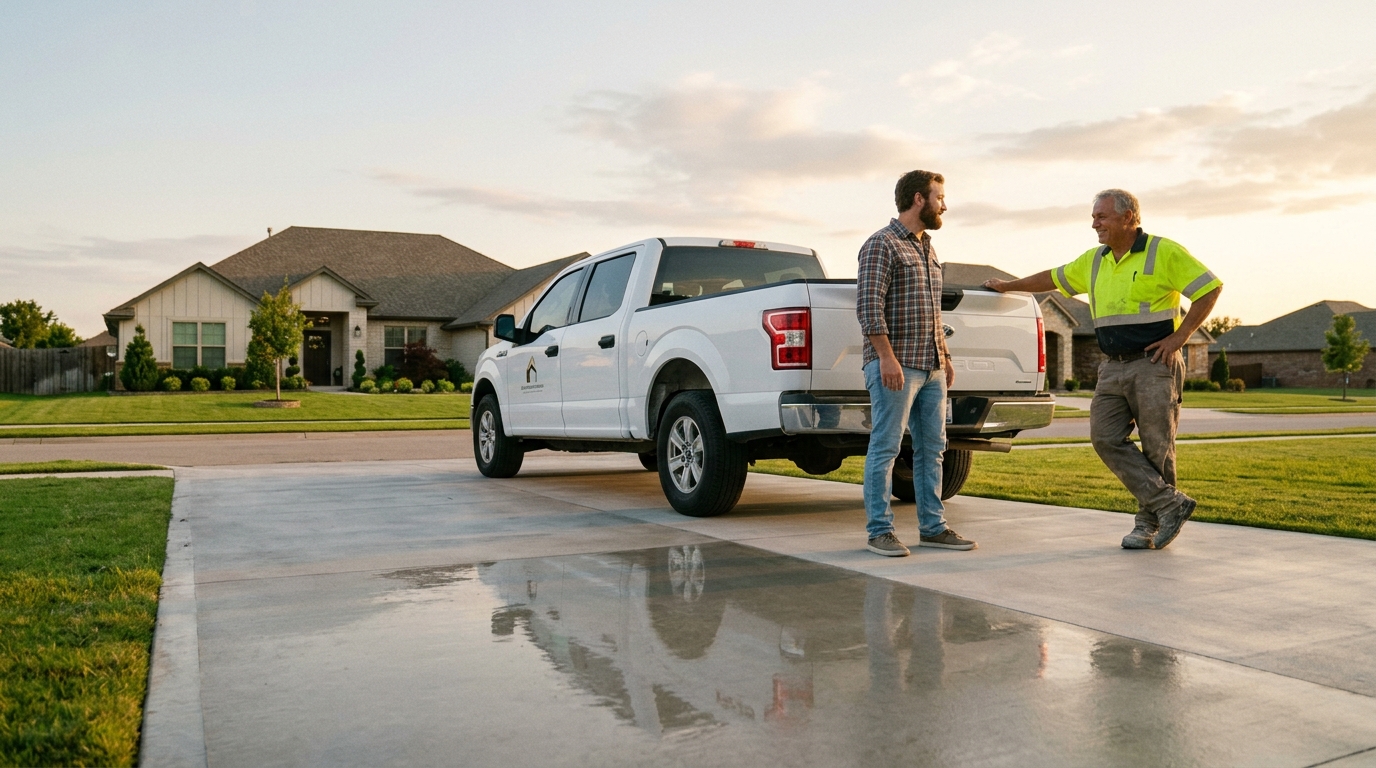
Who Pours New Concrete Driveways and Full Replacements in Oklahoma City?
Askews Concrete Connections is a locally owned concrete contractor serving Oklahoma City, McLoud, and the surrounding east metro. The company specializes in new driveway pours, full tear-out and replacement projects, patios, foundations, and shop floor pads. This guide explains how to evaluate contractors, verify credentials, understand costs, and navigate the specific challenges of concrete work in the Oklahoma City region. For additional details, review the .
How to Choose a Contractor
Choosing the right concrete contractor is about more than finding the lowest bid. A reliable contractor demonstrates consistent quality, clear communication, and a proven track record in your specific area. Askews Concrete Connections emphasizes that the owner is on every job, which ensures direct accountability and consistent oversight from start to finish.
Experience and Local Knowledge
Concrete work is highly dependent on local soil conditions and weather patterns. A contractor with deep roots in the Oklahoma City metro understands how the local clay soil behaves and how to prepare the subgrade properly. Look for a company that has been operating in the region for years, as this indicates they have navigated the specific challenges of the area.
Scope of Services
Some contractors only do driveways. Others handle a broader range of flatwork. Askews Concrete Connections offers a comprehensive suite of services, including driveways, patios, foundations, footers, and shop floor pads. Having a single contractor for all your concrete needs can simplify scheduling and ensure consistency in material and finish.
What to Ask Before Committing
Before signing a contract, you need to ask specific questions that reveal the contractor's professionalism and attention to detail. Vague answers are a red flag. You want clear, confident responses that show they have done this work many times.
Key Questions to Ask
- Who will be on site? Ask if the owner or a lead foreman will be present. Askews Concrete Connections ensures the owner is on every job.
- What is the subgrade preparation process? This is the most critical step for longevity. Ask how they compact the soil and what they do if they hit soft spots.
- What is the concrete mix? Ask about the PSI (pounds per square inch) rating and the water-to-cement ratio.
- Do you provide a written estimate? A professional contractor always provides a detailed, written estimate. Askews Concrete Connections offers free estimates through their online form.
How to Verify Credentials
Verifying a contractor's claims is essential to protect your investment. In Oklahoma, concrete contractors are not required to hold a specific state license in the same way electricians or plumbers do, but they must be bonded and insured. You can verify these details independently.
Checking Insurance and Bonding
Always ask for a certificate of insurance. This document should show general liability coverage and workers' compensation. You can verify the policy by calling the insurance company directly using the phone number on the certificate. Do not rely solely on the contractor's word.
Reviewing Past Work
Ask for a list of recent references and visit at least two or three completed projects. Look for cracks, uneven surfaces, or signs of poor finishing. Askews Concrete Connections maintains a portfolio of their work, which you can review on their website to see examples of their quality.
The Process: What Happens and How Long It Takes
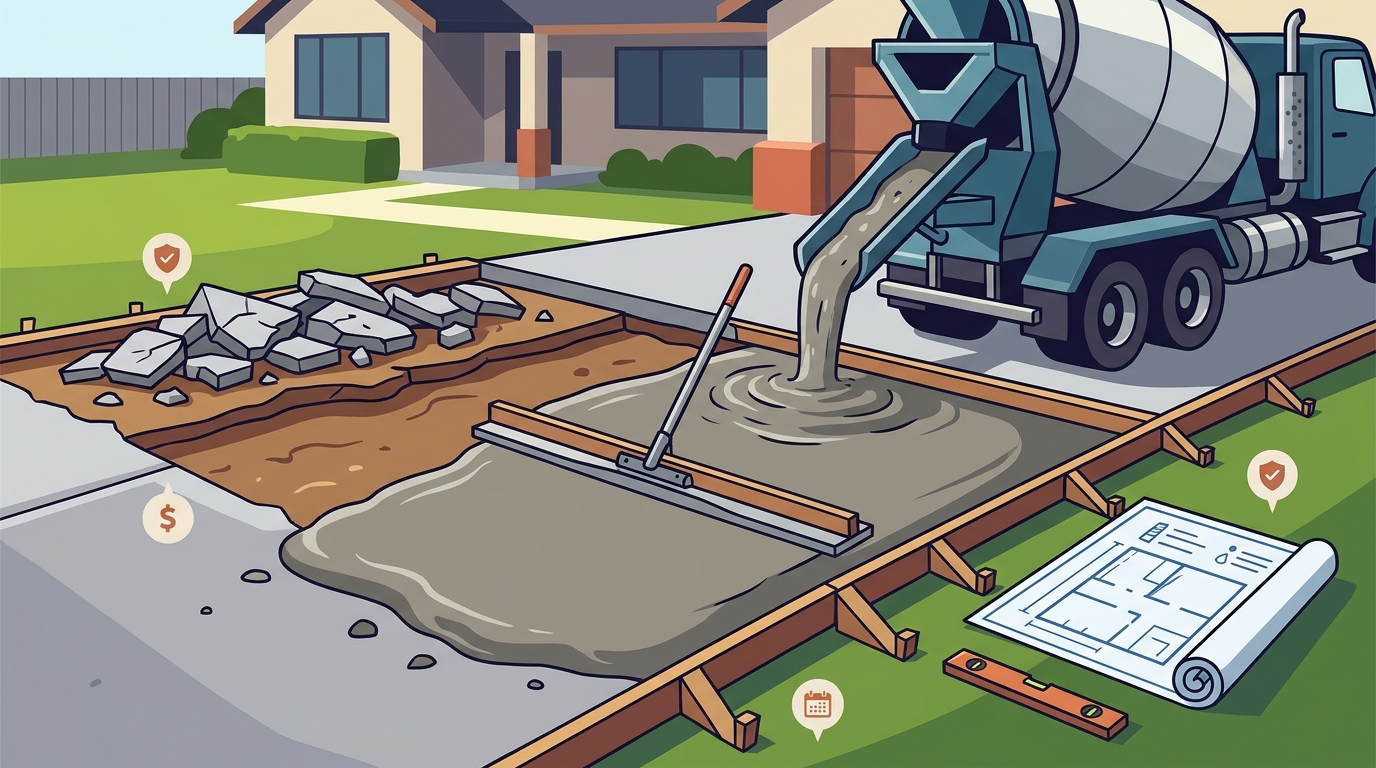
Understanding the workflow helps you plan around the project. A typical driveway replacement involves several distinct phases, each with its own duration and requirements.
Phase 1: Demolition and Preparation
If you are replacing an existing driveway, the first step is demolition. The old concrete is broken up and hauled away. This can take one to two days depending on the size of the driveway. After removal, the subgrade is graded and compacted. This step is crucial. If the soil is not compacted properly, the new concrete will settle and crack.
Phase 2: Forming and Reinforcement
Forms are set up to define the shape and thickness of the driveway. Reinforcement, such as rebar or wire mesh, is placed in the center of the slab. This adds tensile strength and helps prevent cracking.
Phase 3: Pouring and Finishing
The concrete is poured, leveled, and finished. This is a skilled task. The finisher must work quickly to smooth the surface before the concrete begins to set. Askews Concrete Connections focuses on quality work and reliable service, ensuring the finish is smooth and durable.
Phase 4: Curing
After the concrete is finished, it must cure. Curing is the process of keeping the concrete moist to allow the chemical reaction to complete. This takes about 28 days to reach full strength, but you can usually drive on it after 3 to 7 days, depending on the weather and mix.
What It Costs and What Drives the Price
Concrete driveway costs vary widely based on several factors. There is no single fixed price, but understanding the variables helps you evaluate estimates accurately.
Factors That Influence Price
| Factor | Impact on Cost |
|---|---|
| Size of Driveway | Larger areas require more material and labor, increasing the total cost. |
| Thickness | Standard driveways are 4 inches thick. Heavier loads may require 5 or 6 inches, which costs more. |
| Demolition | Tear-out and hauling of old concrete add to the cost. Disposal fees vary by location. |
| Reinforcement | Adding rebar or mesh increases material costs but improves durability. |
| Finish | Broom finish is standard. Exposed aggregate or stamped concrete costs more. |
Askews Concrete Connections provides free estimates, so you can get an accurate price for your specific project without obligation. You can request an estimate through their free estimate page.
Common Mistakes and How to Avoid Them
Many driveway failures are caused by avoidable mistakes during the planning or construction phase. Being aware of these pitfalls can save you money and frustration.
Skipping Subgrade Preparation
The most common mistake is poor subgrade preparation. If the soil is not compacted, the concrete will settle unevenly. This leads to cracks and trip hazards. A reputable contractor will never skip this step.
Ignoring Drainage
Water is the enemy of concrete. If water pools on the driveway or seeps underneath it, it can cause heaving and cracking. Ensure the driveway is sloped away from your home and that water has a place to go.
Choosing the Cheapest Bid
The lowest bid often means cutting corners. This might mean using a weaker concrete mix, skipping reinforcement, or rushing the finishing process. These shortcuts lead to premature failure. It is better to pay a fair price for quality work.
Concrete Versus Alternatives
While concrete is the most common choice for driveways, there are alternatives. Each has its own pros and cons.
Asphalt
Asphalt is cheaper upfront and easier to repair. However, it requires more frequent maintenance and has a shorter lifespan than concrete. It also softens in hot weather, which can be an issue in Oklahoma summers.
Pavers
Pavers are more expensive and take longer to install. They are easier to repair individually, but the overall cost is significantly higher than concrete. They are a good option for patios but less common for full driveways.
Gravel
Gravel is the cheapest option and easy to install. However, it requires regular maintenance to keep it level and free of weeds. It is not a permanent solution for a primary driveway.
Specific Situations: Tiny Homes and Shop Pads
Not all concrete projects are driveways. Askews Concrete Connections also specializes in foundations and footers for buildings and tiny homes, as well as shop floor pads. These projects have specific requirements that differ from standard driveways.
Tiny Home Foundations
Tiny homes require a stable, level foundation. This often involves a slab-on-grade or a pier-and-beam system. The concrete must be poured to precise tolerances to ensure the home sits level and secure. Askews Concrete Connections has experience with these specialized foundations.
Shop Floor Pads
Rules, Rights, and Protections
Understanding your rights and the rules that apply to concrete work helps you protect yourself. In Oklahoma, there are specific regulations and best practices that contractors should follow.
Permits and Inspections
Some concrete projects may require permits, especially if they involve foundations or structural changes. Check with your local municipality to see if a permit is needed. A reputable contractor will handle the permitting process for you.
Contract Terms
Local Specifics for Oklahoma City
Oklahoma City has unique environmental factors that affect concrete work. Understanding these local specifics helps you set realistic expectations.
Soil Conditions
The soil in the Oklahoma City metro is often clay-based. Clay expands when wet and shrinks when dry. This movement can cause concrete to crack if the subgrade is not prepared correctly. A local contractor knows how to manage this soil type.
Weather Patterns
Oklahoma experiences extreme weather, including freezing winters and hot summers. Concrete must be protected from freezing during the curing process. In winter, contractors may need to use heated enclosures or insulating blankets. In summer, they must ensure the concrete does not dry out too quickly.
Timing and Seasonal Considerations
When you schedule your project matters. Concrete work is weather-dependent, and timing can affect both the cost and the quality of the final product.
Spring and Fall
Spring and fall are the best times to pour concrete. The temperatures are mild, which allows for proper curing. However, these are also the busiest times for contractors, so you should book early.
Winter
Winter pouring is possible but more challenging. You need to protect the concrete from freezing. This can add to the cost. If you are in a hurry, winter might be an option, but be prepared for potential delays due to weather.
Summer
Summer pouring requires careful management of moisture. The concrete can dry out too quickly, leading to cracks. Contractors use curing compounds and shade to manage this. It is doable, but requires extra attention.
Long-Term Results and Durability
A well-installed concrete driveway can last for decades. The key to long-term durability is proper installation and maintenance.
Expected Lifespan
A standard concrete driveway can last 20 to 30 years or more. If it is properly reinforced and maintained, it can last even longer. Asphalt, by comparison, typically lasts 15 to 20 years.
Maintenance
Concrete requires minimal maintenance. You should seal the driveway every 3 to 5 years to protect it from stains and water damage. Regularly inspect the driveway for cracks and fill them promptly to prevent water from seeping in.
Key Takeaways
- Choose a contractor with local experience and a proven track record.
- Always verify insurance and bonding independently.
- Subgrade preparation is the most critical step for longevity.
- Get a detailed, written estimate before committing.
- Concrete is more durable than asphalt but requires proper curing.
- Timing matters. Spring and fall are the best seasons for pouring.
- Askews Concrete Connections offers free estimates and owner-on-site oversight.
Frequently Asked Questions
How long does it take to pour a new concrete driveway?
The actual pouring and finishing takes one day. However, the entire project, including demolition, preparation, and curing, can take one to two weeks.
Do I need a permit for a new driveway in Oklahoma City?
It depends on the specific location and scope of the project. Check with your local municipality. A reputable contractor will handle the permitting process for you.
How thick should a concrete driveway be?
Standard driveways are 4 inches thick. If you plan to drive heavy vehicles, such as trucks or RVs, you may need 5 or 6 inches.
Can I drive on the new driveway immediately?
No. You should wait at least 3 to 7 days before driving on the new concrete. Full strength is reached after 28 days.
What is the cost of a new concrete driveway in Oklahoma City?
Costs vary based on size, thickness, and finish. Askews Concrete Connections offers free estimates, so you can get an accurate price for your specific project.
How do I maintain a concrete driveway?
Seal the driveway every 3 to 5 years. Regularly inspect for cracks and fill them promptly. Keep the driveway clean to prevent stains.
Who is the owner of Askews Concrete Connections?
Askews Concrete Connections is a locally owned business. The owner is on every job to ensure quality and accountability.